
← Back to News
Published on 08/09/2026
Paraguay expands investment attraction, but viability must be analyzed before internationalization
Advance of Maquila, tax incentives, and competitive costs increase interest from Brazilian companies, but a complete analysis of the operation is considered essential before the investment decision
The growth of investments, the expansion of the Maquila regime, and the modernization of tax incentives have been consolidating Paraguay as one of the destinations evaluated by Brazilian companies interested in internationalizing their operations. Despite the favorable scenario, experts warn that tax benefits and lower costs, in isolation, are not sufficient to determine whether an operation will be more profitable in the neighboring country.
Between January and July 2026, projects under Paraguay's tax incentive regime totaled approximately US$ 448 million, an increase of 32% compared to the same period of the previous year. According to data from the Ministry of Industry and Commerce (MIC), 116 projects were approved, with an expected generation of 2,621 jobs. About 73% of investments were concentrated in the secondary sector, especially in industrial and productive activities.
The maquiladora industry is also expanding. Until July, sector exports reached US$ 860 million, a growth of 28% over the same period in 2025. In the period, 42 new programs had been authorized, representing about US$ 59 million in investments and the projection of 1,946 new jobs.
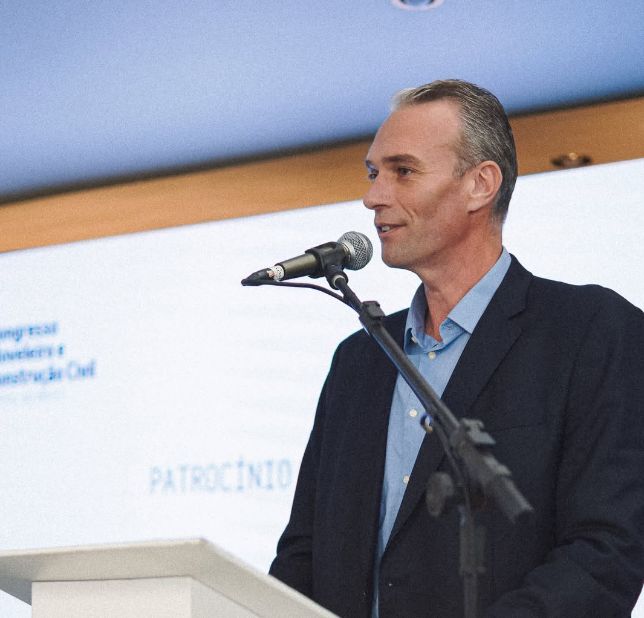
For Jonathan Roger Linzmeyer, founder and president of CN Mercosul S.A., the increased dissemination of opportunities in Paraguay must be accompanied by an individualized analysis of each project. "Today there is a lot of information about Paraguay circulating on social media, in the press, and in the consulting market itself. This is positive because it presents the country to Brazilian entrepreneurs. The problem is using general information to conclude that a given operation will automatically be more profitable in Paraguay. Each company needs to do its own math," he says.
Analysis must go beyond taxes
According to Linzmeyer, a consistent internationalization assessment must consider much more than taxation, logistics, fiscal classification, NCM, certificates of origin, or value-added percentages. Among the factors that can directly interfere with the result are costs with raw materials, labor, energy, transportation, corporate structure, import and export, available incentives, necessary investments, and specific characteristics of each product or activity.
CN Mercosul has developed a Feasibility Study methodology that seeks to bring these elements together and compare the operation maintained or projected in Brazil with a possible structured model in Paraguay. According to the company, this work has already been applied to businesses of different sizes and segments, including small and medium-sized enterprises, multinationals, and publicly traded companies. "Our work does not begin by trying to prove that Paraguay is better. It begins by trying to find out whether Paraguay is economically viable for that company, for that product, and for that specific operation," explains Linzmeyer.
One of the objectives of the study is to arrive at a projected Income Statement (DRE), allowing the entrepreneur to visualize more broadly the economic impacts of the investment. "Before the factory, before the company, and before the investment, we need to have an Income Statement. It is no use discovering that a certain tax is lower if, when we put raw materials, logistics, labor, structure, investment, and operational and commercial costs into the same account, the margin does not justify the project," he emphasizes.
New rules expand possibilities
The interest in Paraguay also occurs at a time of changes in investment attraction legislation. Law No. 7,547/2025 established a new framework for the Maquila Regime, subsequently regulated by Decree No. 5,714/2026, while Law No. 7,548/2025 created a new Tax Incentive Regime for National and Foreign Investments.
For Linzmeyer, however, the existence of benefits does not eliminate the need to evaluate the eligibility of each company and, mainly, the expected economic return. "One thing is for a benefit to exist in the legislation. Another is for the company to be able to qualify. And there is still a third question: after all benefits, costs, and investments, does this operation generate the expected result?", he observes.
Study may indicate that investment is not worthwhile
The analysis may also conclude that setting up a given operation in Paraguay is not economically recommended. For CN Mercosul, this result does not represent a failure of the project, but precisely one of the functions of a feasibility study. "If we reach the conclusion that in that scenario the operation is not viable, the study has fulfilled its role. It is much better to find this out before the investment than after buying an area, building a factory, importing equipment, hiring employees, and transferring part of the operation to another country," says Linzmeyer.
Paraguay continues to receive new investments in sectors such as food, metallurgy, plastics, chemical and pharmaceutical industry, textiles, wood, and auto parts. In Alto Paraná, for example, a plant in the pharmaceutical and nutraceutical segments inaugurated in July represented an investment of over US$ 8 million. In Linzmeyer's assessment, this movement confirms that concrete opportunities exist, but it also increases the responsibility of entrepreneurs in decision-making. "Paraguay is experiencing an excellent moment and there are real opportunities. But opportunity cannot be confused with a guarantee of profitability. Internationalization is a business decision and must be treated as such," he says.
For the president of CN Mercosul, the central question must be answered before any investment: "Paraguay can be an excellent opportunity. But before investing, there is a question that needs to be answered with numbers: does the math really add up?"
Between January and July 2026, projects under Paraguay's tax incentive regime totaled approximately US$ 448 million, an increase of 32% compared to the same period of the previous year. According to data from the Ministry of Industry and Commerce (MIC), 116 projects were approved, with an expected generation of 2,621 jobs. About 73% of investments were concentrated in the secondary sector, especially in industrial and productive activities.
The maquiladora industry is also expanding. Until July, sector exports reached US$ 860 million, a growth of 28% over the same period in 2025. In the period, 42 new programs had been authorized, representing about US$ 59 million in investments and the projection of 1,946 new jobs.
For Jonathan Roger Linzmeyer, founder and president of CN Mercosul S.A., the increased dissemination of opportunities in Paraguay must be accompanied by an individualized analysis of each project. "Today there is a lot of information about Paraguay circulating on social media, in the press, and in the consulting market itself. This is positive because it presents the country to Brazilian entrepreneurs. The problem is using general information to conclude that a given operation will automatically be more profitable in Paraguay. Each company needs to do its own math," he says.
Analysis must go beyond taxes
According to Linzmeyer, a consistent internationalization assessment must consider much more than taxation, logistics, fiscal classification, NCM, certificates of origin, or value-added percentages. Among the factors that can directly interfere with the result are costs with raw materials, labor, energy, transportation, corporate structure, import and export, available incentives, necessary investments, and specific characteristics of each product or activity.
CN Mercosul has developed a Feasibility Study methodology that seeks to bring these elements together and compare the operation maintained or projected in Brazil with a possible structured model in Paraguay. According to the company, this work has already been applied to businesses of different sizes and segments, including small and medium-sized enterprises, multinationals, and publicly traded companies. "Our work does not begin by trying to prove that Paraguay is better. It begins by trying to find out whether Paraguay is economically viable for that company, for that product, and for that specific operation," explains Linzmeyer.
One of the objectives of the study is to arrive at a projected Income Statement (DRE), allowing the entrepreneur to visualize more broadly the economic impacts of the investment. "Before the factory, before the company, and before the investment, we need to have an Income Statement. It is no use discovering that a certain tax is lower if, when we put raw materials, logistics, labor, structure, investment, and operational and commercial costs into the same account, the margin does not justify the project," he emphasizes.
New rules expand possibilities
The interest in Paraguay also occurs at a time of changes in investment attraction legislation. Law No. 7,547/2025 established a new framework for the Maquila Regime, subsequently regulated by Decree No. 5,714/2026, while Law No. 7,548/2025 created a new Tax Incentive Regime for National and Foreign Investments.
For Linzmeyer, however, the existence of benefits does not eliminate the need to evaluate the eligibility of each company and, mainly, the expected economic return. "One thing is for a benefit to exist in the legislation. Another is for the company to be able to qualify. And there is still a third question: after all benefits, costs, and investments, does this operation generate the expected result?", he observes.
Study may indicate that investment is not worthwhile
The analysis may also conclude that setting up a given operation in Paraguay is not economically recommended. For CN Mercosul, this result does not represent a failure of the project, but precisely one of the functions of a feasibility study. "If we reach the conclusion that in that scenario the operation is not viable, the study has fulfilled its role. It is much better to find this out before the investment than after buying an area, building a factory, importing equipment, hiring employees, and transferring part of the operation to another country," says Linzmeyer.
Paraguay continues to receive new investments in sectors such as food, metallurgy, plastics, chemical and pharmaceutical industry, textiles, wood, and auto parts. In Alto Paraná, for example, a plant in the pharmaceutical and nutraceutical segments inaugurated in July represented an investment of over US$ 8 million. In Linzmeyer's assessment, this movement confirms that concrete opportunities exist, but it also increases the responsibility of entrepreneurs in decision-making. "Paraguay is experiencing an excellent moment and there are real opportunities. But opportunity cannot be confused with a guarantee of profitability. Internationalization is a business decision and must be treated as such," he says.
For the president of CN Mercosul, the central question must be answered before any investment: "Paraguay can be an excellent opportunity. But before investing, there is a question that needs to be answered with numbers: does the math really add up?"